

Description
Full-Spectrum Nitrogen Supplement - Ammonium + Urea
NITROUS supplies nitrogen as ammonium and urea, the forms corals and their zooxanthellae use most easily. For corals to use nitrate they have to chemically convert it to ammonium which is an energetically costly process. Studies show corals directly fed ammonium get more energy from their zooxanthellae while corals fed nitrate get less energy. During heat stress, nitrate-fed corals bleached worse than controls, while ammonium-fed corals did not bleach. NITROUS cuts out the middle man of nitrate conversion supplying your corals directly with ready to use nitrogen for growth and color.
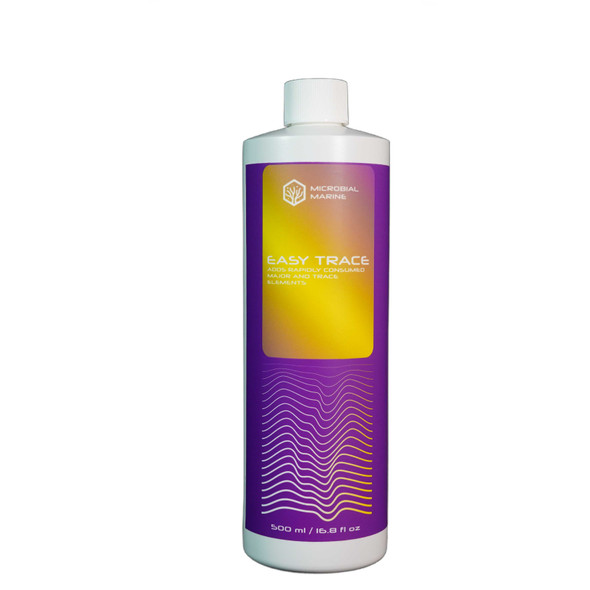
Urea occurs naturally on reefs and is absorbed fastest under light. Inside the coral, urease, a nickel-based enzyme, breaks urea down into ammonium. Studies show supplementing corals with both urea and nickel leads to an increase in growth. Use EASY TRACE with NITROUS to supply nickel along with other essential trace elements your corals need.
Made with USP- and ACS-grade ammonium chloride and urea. Shelf stable for over a year and dosing-pump compatible.
Instructions:
Begin with 1 mL per 10 US gal (38 L) daily. This adds about 0.10 ppm total nitrogen (a safe dose):
- 0.07 ppm as ammonium (0.085 ppm as NH₃, the form many test kits report)
- 0.03 ppm as urea
If fully converted by bacteria, that equals about 0.44 ppm nitrate. You'll see less, because corals, algae, and bacteria use much of the nitrogen first.
For doses above 1 mL per 10 gal, use a dosing pump and dose only during the photoperiod, when corals consume ammonium and urea fastest, so ammonia doesn't build up overnight. A dosing pump with a stepper motor is best.
Switching from nitrate:
Start at 1 mL per 10 gal. Increase by up to 1 mL per 10 gal each week until nitrate reaches your target. Nitrate may drop at first because ammonium and urea are consumed before they convert. Ammonium uses slightly more alkalinity than nitrate, so monitor alkalinity as you raise the dose.
Cycling (no livestock only):
The cycling dose is 20× the daily dose and is toxic to fish, corals, and invertebrates.
- Add 2 mL per gallon, which gives about 2.0 ppm total nitrogen (about 1.7 ppm ammonia as NH₃).
- Test every 1–2 days. When ammonia falls below about 0.5 ppm, dose again.
- The cycle is complete when a full dose clears to zero ammonia and nitrite within 24 hours.
- Do a water change if needed to lower nitrate before adding livestock.
Ingredients (mg/mL):
Ammonium chloride (10), Urea (2.5), Stabilizers, Water. Total nitrogen: 3.8 mg N/mL.